
 Nepal
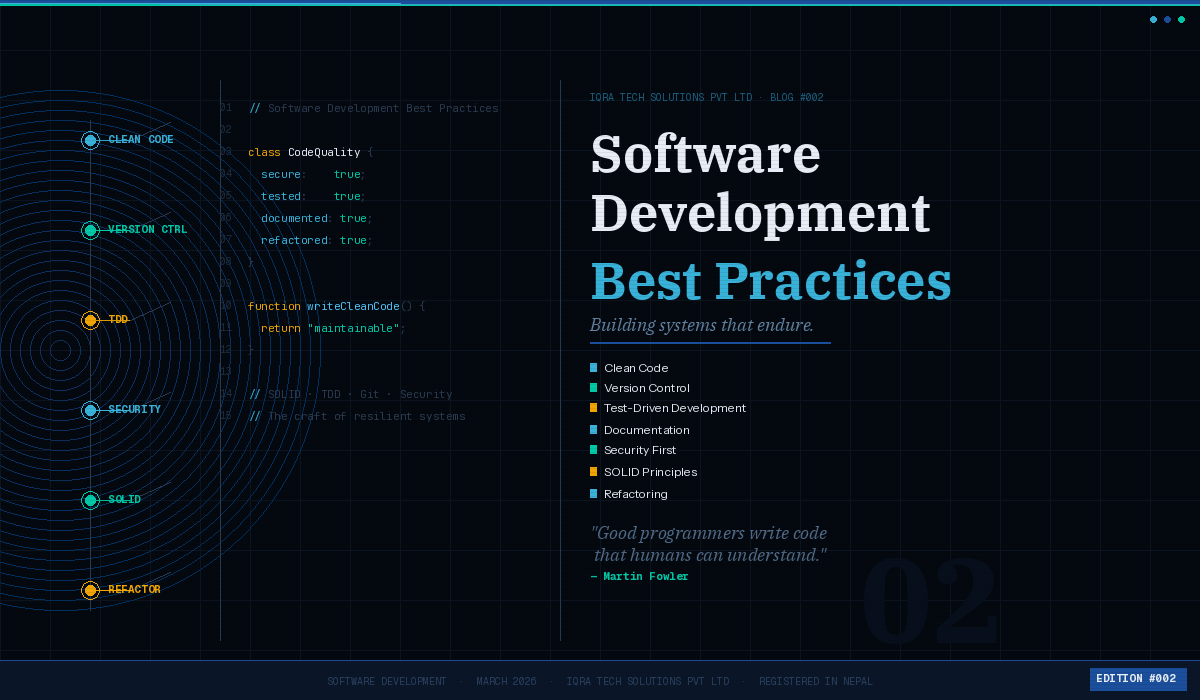
NepalSoftware Development Best Practices: Building Robust, Scalable, and Maintainable Systems
Great software doesn’t happen by accident. It’s built through discipline, smart processes, and a commitment to continuous improvement. At Iqra Tech Solutions Pvt Ltd, we engineer systems that are robust, secure, and built to last — and it all starts with the right practices.
1. Write Clean and Readable Code
Readable code is good code. Since code is read far more than it’s written, clarity matters more than cleverness.
-
Use meaningful variable and function names
-
Keep functions small and focused
-
Avoid deep nesting
-
Follow standards like PEP 8 or Google Style Guides
2. Implement Version Control Rigorously
Git isn’t optional — it’s essential. A solid version control strategy keeps your team aligned and your codebase safe.
-
Use GitFlow or trunk-based development
-
Write clear, descriptive commit messages
-
Always use pull requests with peer code reviews
3. Embrace Test-Driven Development (TDD)
Don’t treat testing as an afterthought. Write tests first, then build features around them.
-
Cover unit, integration, and end-to-end tests
-
Automate testing through CI/CD pipelines
-
Catch bugs early before they reach production
4. Document Thoroughly and Consistently
Good documentation saves hours of confusion later. Teams that document well, scale well.
-
Maintain API references, README files & architecture diagrams
-
Add meaningful inline code comments
-
Use tools like Swagger, Confluence, or Notion
5. Prioritize Security from Day One
Security isn’t a feature you add later — it’s a foundation you build from the very start.
-
Conduct regular dependency audits
-
Implement input validation & least-privilege access
-
Use SonarQube, OAuth 2.0, JWT & penetration testing
6. Follow SOLID Principles and Design Patterns
SOLID principles keep your code flexible, testable, and free from technical debt.
-
Single Responsibility & Open/Closed Principles
-
Liskov Substitution & Interface Segregation
-
Apply patterns like Factory, Observer & Repository
7. Continuously Refactor and Manage Technical Debt
Technical debt grows quietly and strikes hard. Stay ahead of it.
-
Schedule dedicated refactoring time every sprint
-
Use linters and code quality tools to spot issues early
-
Treat refactoring as a priority, not a luxury
Conclusion
Best practices aren’t rules that slow you down — they’re the foundation that lets you move fast with confidence. At Iqra Tech Solutions Pvt Ltd, we are committed to engineering excellence in every project we deliver. Because great software isn’t just built — it’s crafted.
Any fool can write code that a computer can understand. Good programmers write code that humans can understand.
— Martin Fowler